

How to Spot Early Tree Problems Before They Become Safety Risks
If your tree has dead branches, cracked limbs, leaning growth, or strange leaf loss, it may need professional help soon. Trees often show warning signs before they fail. Acting early can prevent property damage, injury, and costly removal. In places like Verona, PA, weather swings and storms can make weak trees fail faster. Knowing what to look for helps you decide when simple shrub trimming is enough and when expert tree care is the safer choice.
Common Symptoms You Should Not Ignore
Trees rarely fall without warning. Most give clues months ahead of time. The key is knowing how to spot them.
- Large dead branches with no leaves during growing season
- Cracks in the trunk or main limbs
- Mushrooms growing near the base
- Tree leaning more than it used to
- Peeling bark or hollow spots
- Sudden leaf drop or thin canopy
These signs suggest stress, disease, or root problems. While shrub trimming can improve shape and remove small dead growth, major warning signs often point to deeper issues.
What Often Causes These Problems
Several things can weaken a tree over time. Storm damage is common. Strong winds can create cracks that slowly grow. Heavy rain can loosen soil around roots. Drought can dry roots and make branches brittle.
Pests and disease are also common causes. Insects bore into wood and weaken structure. Fungal growth can rot the inside of the trunk. Sometimes construction work damages roots without the homeowner even knowing.
Poor pruning is another issue. Improper shrub trimming or cutting large limbs without proper technique can stress a tree. Over time, that stress shows up as dieback or decay.
What to Check Before Calling a Professional
You can do a basic visual check from the ground. Walk around the tree slowly. Look up into the canopy. Notice if branches cross or rub together. Check if one side has far fewer leaves.
Lightly push on small dead branches. If they snap easily, that section may already be lifeless. Look at the soil near the base. Is it cracked and dry? Is it lifting on one side?
Do not climb the tree or cut large limbs yourself. Ground-level checks are enough to tell if help is needed.
Safe Fixes Vs Professional-Level Solutions
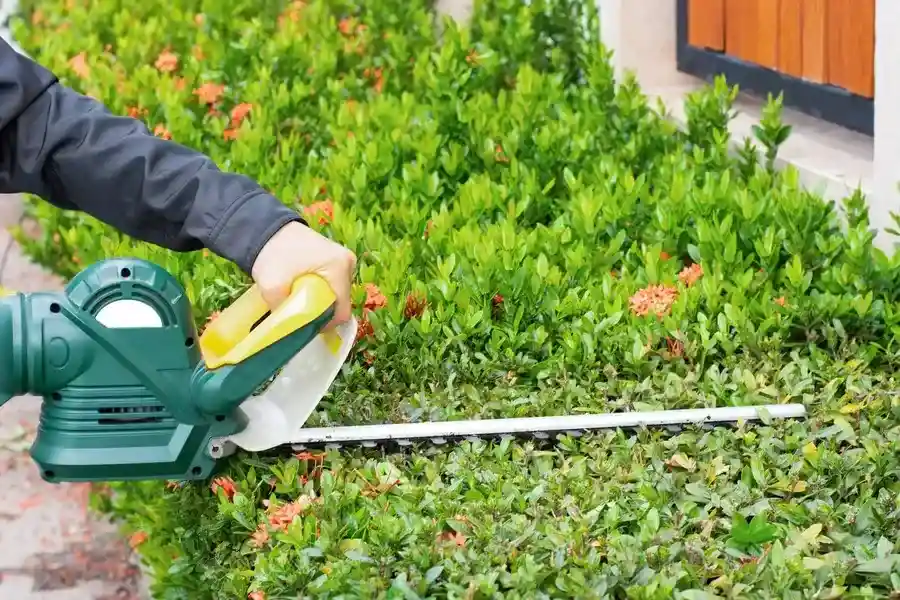
Some minor issues can be handled with simple care. For example, removing small dead twigs or doing light shrub trimming can improve airflow and shape. Adding mulch around the base can help protect roots.
However, certain problems require trained crews and proper equipment:
- Large hanging or cracked limbs
- Trees close to power lines
- Deep trunk splits
- Root damage near foundations
- Signs of internal rot
These situations are not safe for DIY work. Professional tree care teams use ropes, lifts, and safety gear to remove hazards without damaging nearby structures.
How to Prevent Major Tree Problems
Prevention starts with regular inspections. Walk your yard at least twice a year. After big storms, check again.
Keep up with routine shrub trimming and pruning during the correct season. This reduces stress and controls weight on heavy limbs. Water young trees during dry spells. Avoid piling soil or mulch against the trunk.
If you are planning home improvements, protect tree roots from heavy equipment. Healthy roots support a stable tree.
When It Is Time to Schedule Service
If you notice more than one warning sign, it is time to act. Trees that hang over your house, driveway, or sidewalk should be checked sooner rather than later. Waiting can turn a manageable pruning job into a full removal.
Professional crews can evaluate structure, soil condition, and overall health. They can tell you whether focused shrub trimming will solve the issue or if removal or structural support is needed.
Get Expert Help Before Small Issues Grow
If you have noticed warning signs around your property in Verona, PA, our team at Flaherty Tree Service LLC is ready to help. We handle shrub trimming and full tree care with safety and attention to detail. Call (412) 227-9758 to schedule an inspection and let us protect your trees and your home.